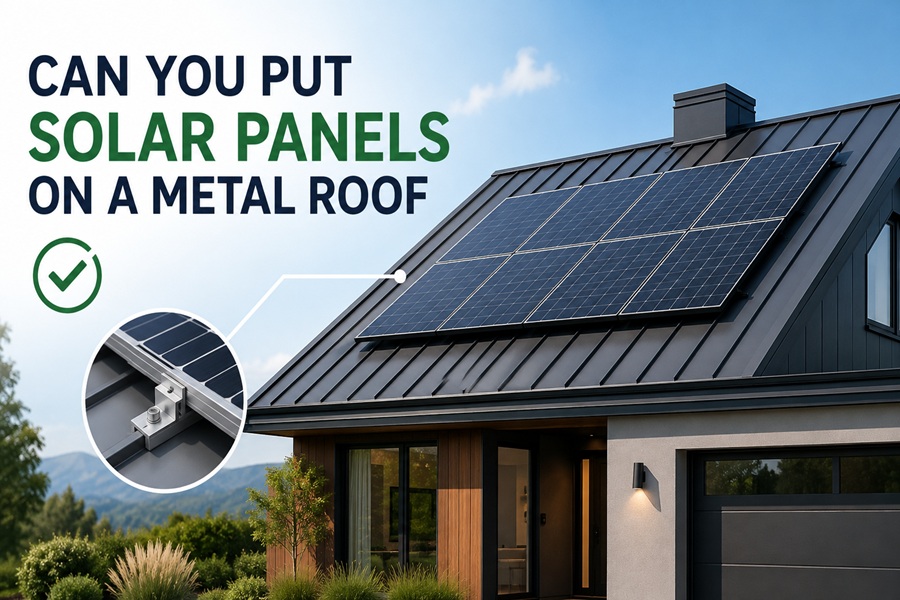
Yes, you can put solar panels on a metal roof, and a metal roof is arguably the best roof for solar. A standing seam metal roof lets installers clamp panels onto the raised seams with no holes drilled at all, which speeds up the job, protects the warranty, and removes the main cause of solar-related leaks.
If you have a metal roof, or you are weighing one, this is the good news scenario for going solar. The metal outlasts the panels, reflects heat, and often makes mounting cleaner than it would be on shingles. Here is how it works, what to watch for, and the one corrosion detail most guides skip.
Can you put solar panels on a metal roof?
Yes, without question. Older worries about metal interfering with the panels are outdated. Modern mounting systems are built specifically for metal, and installers now treat it as one of the most solar-friendly surfaces there is.
The method changes with the type of metal roof you have, which is the part that actually matters.
Why is a metal roof one of the best roofs for solar?
Three reasons stack up in your favor:
- The roof outlives the panels. Solar panels are warrantied for around 25 to 30 years. A metal roof lasts 40 to 70. So your roof will not need replacing under the array, which is exactly the headache asphalt owners face when a 15-year shingle roof dies under 25-year panels.
- Metal reflects heat. It already cuts cooling costs on its own. Pair it with an array and you stack the savings.
- Panels can run cooler. Because a metal roof does not soak up heat the way asphalt does, panels above it often run a touch cooler, and cooler panels are slightly more efficient.
There is also a timing angle worth naming. If your roof is near end of life, installing a metal roof and solar together avoids paying twice to remove and reinstall the array later.
How are solar panels attached to a standing seam metal roof?
This is the ideal case. A standing seam roof has raised vertical ribs running up the slope. Those seams act as built-in rails.
Installers use non-penetrating clamps that grip the seams. That means:
- No holes are drilled into the roof surface.
- No new leak points are created.
- The roof warranty usually stays intact.
- Labor is faster and cheaper, because there is no drilling, sealing, or flashing at every mount.
Mount systems from makers like S-5!, QuickMount PV, and EcoFasten are built for exactly this. If you are shopping roofs with solar in mind, standing seam is the profile to ask for.
How do you mount solar panels on a corrugated or ribbed metal roof?
Exposed-fastener roofs, the corrugated and ribbed panels held down by visible screws, do require penetrations. That is fine when it is done right.
Here the installer:
- Attaches brackets by driving fasteners into the rafters or solid decking.
- Seals each penetration with gasketed, weatherproof hardware (butyl or EPDM washers) and proper flashing.
- Places mounts on the high ribs, not the low channels, so water still drains freely.
Done correctly, a penetrated corrugated roof stays watertight for decades. The key is an installer who knows metal, not one guessing from shingle habits.
Do solar panels damage a metal roof or cause leaks?
Not when installed properly. On standing seam, the non-penetrating clamps virtually eliminate leak risk because nothing pierces the roof. On corrugated roofs, sealed and flashed penetrations hold up well.
The failures you read about almost always trace back to the installer, not the roof: wrong bracket for the profile, penetrations in the wrong spot, or cheap unsealed hardware. Choosing a crew experienced with metal is the single biggest protection.
Will mixing metals cause corrosion on my roof?
This is the detail most articles leave out, and it is the one that quietly ruins roofs. When two dissimilar metals touch in the presence of water, they can trigger galvanic corrosion, an electrochemical reaction where the more active metal slowly eats away.
Real examples that cause trouble:
- Aluminum panel framing and bare steel roofing, with rainwater as the electrolyte between them.
- Copper flashing or gutter runoff dripping onto a steel roof.
Experienced installers prevent this by:
- Using stainless steel or galvanized hardware that plays well with the roof metal.
- Isolating dissimilar metals with gaskets or barrier layers where they meet.
- Choosing components that sit close together on the galvanic series.
In solar and roofing forums, this is a recurring caution among DIY installers: keep steel and aluminum from forming a wet electrical path, and pick fasteners that will not become the sacrificial metal. Ask your installer directly how they are handling metal compatibility. A good one will have a clear answer.
Does a metal roof affect solar panel performance?
Positively, if anything. The reflective surface and cooler operating temperature can nudge output up slightly. Orientation still rules the outcome: south-facing gives the most production, with west and east as solid alternatives. Installers generally avoid the north slope.
One more design factor unique to metal: thermal movement. Metal expands in heat and contracts in cold, so the mounting system must include hardware that allows the roof to move without stressing the panels or fasteners. This is standard for metal-savvy installers.
Does adding solar void a metal roof warranty?
It can, if penetrations are made improperly. This is another reason standing seam clamps are prized: because they do not pierce the roof, they typically preserve the manufacturer warranty. On penetrated roofs, confirm in writing that the mounting method and flashing keep your warranty valid.
What should you check before installing solar on a metal roof?
Run this checklist before you sign:
- Roof age and condition. Solar should go on a sound roof. If the metal is old or damaged, address it first.
- Roof profile. Standing seam, corrugated, ribbed, or metal shingle. It sets the mounting method.
- Installer experience with metal. Not every solar crew knows metal. Ask for metal-specific references.
- Metal compatibility. Confirm the plan to prevent galvanic corrosion.
- Warranty impact. Get written confirmation the mount preserves your roof warranty.
- Listed racking. Ask that the mounting system is UL 2703 listed for safety and durability.
- Current incentives. Federal and state solar programs change, so verify what you currently qualify for before budgeting.
Frequently asked questions
Is a standing seam metal roof better for solar than shingles?
Yes. No-drill clamps make it cleaner, faster, lower-risk, and longer-lasting than a typical shingle mount.
Can you install solar on any metal roof?
Effectively yes, but the method differs. Standing seam uses clamps, corrugated and ribbed use sealed penetrations, and metal shingles use special mounts.
Will solar panels make my metal roof leak?
Not with a proper install. Standing seam clamps make no holes, and penetrated roofs are sealed and flashed.
Do metal roofs and solar save more energy together?
Yes. The roof reflects heat and lowers cooling costs, and the array generates power, so the savings compound.
How long will the system last on a metal roof?
The panels are rated around 25 to 30 years, and the metal roof underneath commonly lasts 40 to 70, so you will not reroof under the array.