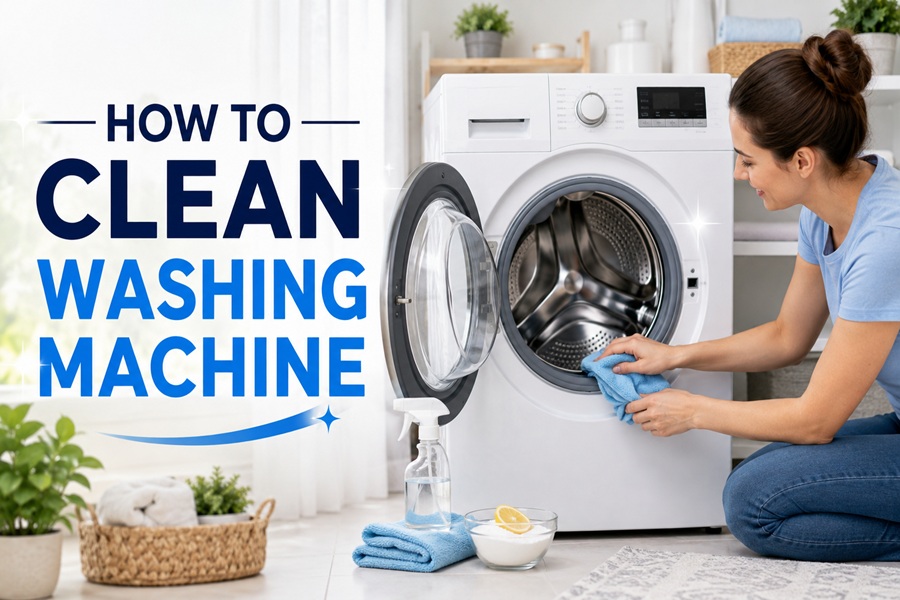
Quick answer: To clean a washing machine, run an empty hot cycle with two cups of white vinegar (four for a top loader) or a washer cleaning tablet, then scrub the rubber gasket, detergent dispensers, and the drain filter by hand. Wipe everything dry and leave the door open to air out. Modern high-efficiency machines use so little water that they never rinse themselves clean, which is exactly why they start to smell.
The musty odor in your laundry usually is not the clothes. It is the machine. Soap scum, body oil, and trapped moisture feed mold and bacteria in the parts you never see. This guide cleans the washer one part at a time, calls out where front loaders and top loaders differ, and covers the filter almost nobody knows about.
Why does a washing machine start to smell in the first place?
Because it no longer cleans itself. Older machines flooded the drum with water. Modern high-efficiency (HE) machines use a fraction of that, so residue is left behind after every load.
That residue is a buffet for mold and bacteria. Add the warm, dark, damp environment inside a sealed door, and you get the classic musty smell that transfers straight onto clean laundry. Front loaders are the most prone, because their door gasket traps water in its folds.
What do you need to clean a washing machine?
A short, cheap kit handles everything:
- White vinegar, to dissolve soap scum and mineral deposits.
- Baking soda, as a mild scrub and deodorizer.
- Chlorine bleach, for visible mold and heavy bacteria (used separately, never with vinegar).
- A washing machine cleaning tablet such as Affresh, optional but convenient.
- A microfiber cloth, an old toothbrush, and a soft brush.
- A spray bottle for a one-to-one water and vinegar mix.
One safety rule above all: never mix bleach and vinegar. Together they release toxic fumes. If you use both, rinse thoroughly between them.
How do you clean the drum?
The drum is where residue and bacteria collect, so it gets the main treatment.
- Empty the machine completely.
- Add two cups of white vinegar to the drum or dispenser for a front loader, or four cups for a top loader. Or drop in a cleaning tablet instead.
- Run the longest, hottest cycle, or a dedicated “clean washer” or “sanitize” cycle if your machine has one.
- For a top loader, you can pause the cycle mid-fill and let the hot vinegar water soak for 30 to 60 minutes before letting it finish.
- Run an extra rinse and spin afterward to flush out everything.
Vinegar breaks down soap scum and mineral scale. For a sulfur or sewage smell driven by bacteria, use bleach instead of vinegar in this step, then rinse fully.
How do you clean the rubber gasket on a front loader?
This is the number one source of front-load odor, and the part most people skip. The gasket is warm, dark, and constantly damp.
- Pull back the folds of the rubber seal and remove trapped hair, lint, coins, and gunk.
- Spray the gasket with your vinegar solution and let it sit. Tucking a vinegar-soaked cloth into the fold for an hour helps on stubborn buildup.
- Scrub the grooves and corners with an old toothbrush.
- Wipe clean and dry.
There is a real debate worth knowing about here. Some cleaning pros favor vinegar on the gasket, arguing bleach only kills surface mold and can degrade the rubber. Others, including appliance-care brand reps, recommend scrubbing visible mold with a diluted bleach solution (around 10 percent) to disinfect. Both camps agree on one thing: do not use them together, and wipe the gasket bone-dry afterward. If mold keeps returning in the rubber, the seal may eventually need replacing.
How do you clean the dispensers and door?
Detergent and fabric softener leave sticky residue that grows mold.
- Remove the dispenser drawers if they come out, and wash them in warm, soapy water. Use a toothbrush on tight corners.
- If they do not come out, wipe them thoroughly with a vinegar-dampened cloth.
- Wipe the door glass, knobs, and the top edge of the drum opening, all the spots residue hides.
How do you clean the drain filter almost nobody knows about?
Here is the part most guides bury or miss entirely. Most front loaders have a drain pump filter, usually behind a small hatch at the bottom front of the machine. It catches coins, lint, and hair. When it clogs, water drains slowly and the machine turns musty.
- Lay down a towel and a shallow pan, because water will spill out.
- Open the hatch and slowly unscrew the filter cap to drain the water.
- Pull out the filter, remove the debris, and rinse it under the tap.
- Wipe the housing, then reseat the filter snugly and close the hatch.
Check this every one to three months. A neglected filter is a hidden cause of both odor and poor drainage.
How is cleaning a top loader different from a front loader?
The parts and problem spots differ, so the routine adjusts:
| Part or issue | Front loader | Top loader |
|---|---|---|
| Vinegar for drum cycle | About 2 cups | About 4 cups |
| Door gasket | Mold-prone, scrub every time | No gasket to worry about |
| Standing water | Rarely pools | Can pool and go musty at the bottom |
| Drain filter | Usually has one to clean | Often none |
| After each load | Leave door ajar | Leave lid up to dry out |
Top loaders without a center agitator behave a bit like front loaders and appreciate the same drum treatment.
How often should you clean your washing machine?
| Task | Frequency |
|---|---|
| Full drum clean cycle | Monthly, or every 30 washes |
| Wipe gasket and door | After every wash (front loader) |
| Clean dispensers | Monthly |
| Clean drain filter | Every 1 to 3 months |
| Deep descale (hard water) | Every few months |
How do you keep a washing machine from smelling again?
Prevention is easier than the cure. Habits that laundry technicians and pro cleaners recommend:
- Leave the door or lid open between loads so the drum dries out.
- Wipe the gasket dry after each front-load wash.
- Use HE detergent in HE machines, and use less than you think. Overdosing detergent is a top cause of buildup and odor.
- Do not leave wet laundry sitting in the drum. This is the fastest way to breed mildew, in the machine and in the clothes.
- Run hot loads occasionally, not only cold, to keep residue from accumulating.
That last point ties into a bigger truth: a musty washer makes musty laundry. If your clothes come out smelling off even when clean, the machine itself is often the real culprit, and this routine fixes it at the source.
Frequently asked questions
Can I clean my washing machine with just vinegar?
Yes, for routine odor and soap scum. Use bleach only for visible mold or a strong bacterial smell, and never mix the two.
Is bleach or vinegar better for washer mold?
Opinions differ. Vinegar is gentler on rubber and dissolves scum. A diluted bleach solution disinfects visible mold more aggressively. Pick one, rinse well, and dry the gasket.
Why does my washing machine smell even after cleaning?
Check the drain filter and the gasket folds, the two most overlooked spots, and make sure you are drying the machine out between loads.
How often should I clean my washing machine?
A full clean cycle monthly, gasket wipes after each front-load wash, and the drain filter every one to three months.
Does leaving the washer door open really help?
Yes. It lets the drum and gasket dry, which stops the mold and mildew that cause odor.