
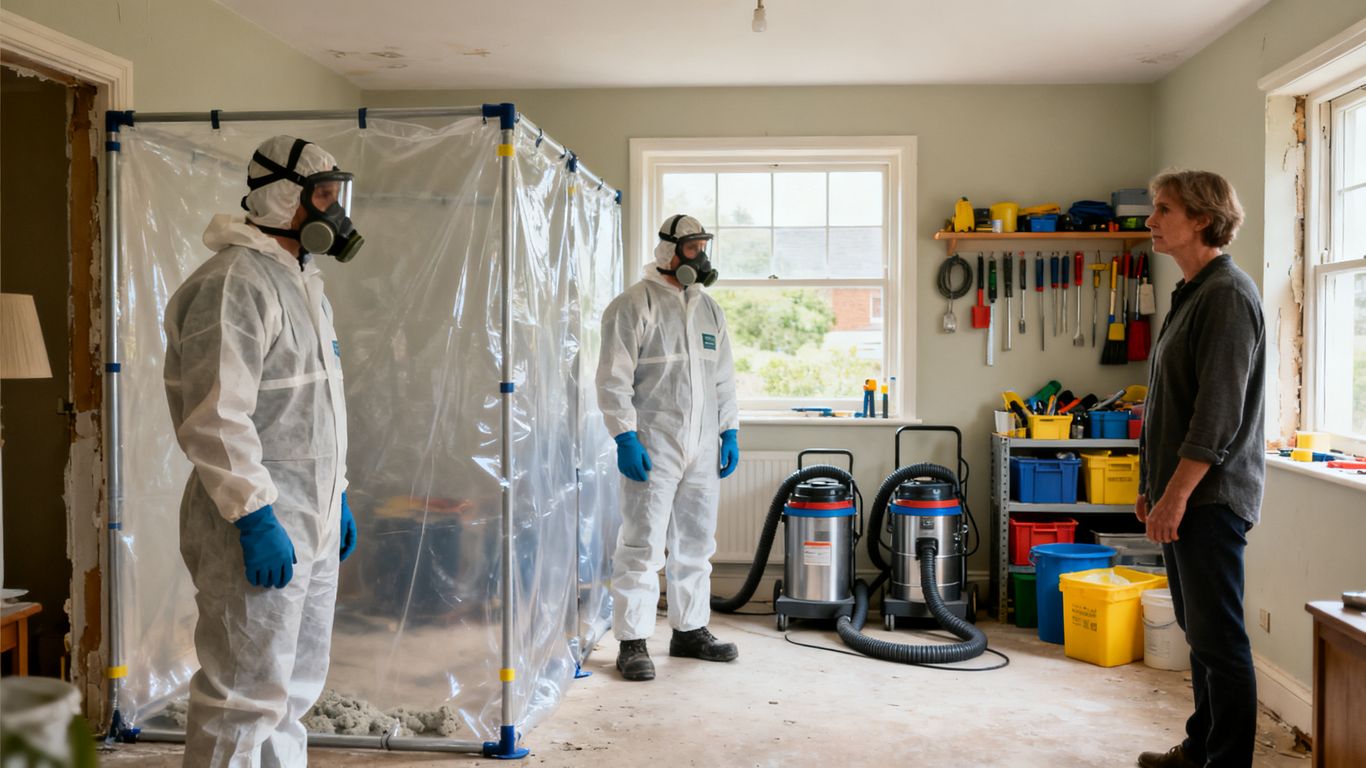
Before work begins, the contractor needs to understand what materials are present, where they are located, and how the planned work could affect the property. The initial visit is a planning step, not a reason to disturb materials that have not been assessed. A clear scope helps the property owner understand what will happen and what decisions may still be needed.
How contractors identify and assess suspected asbestos-containing materials
Contractors review the building’s age, renovation history, and the materials in areas affected by the project. Suspect materials may include insulation, flooring, ceiling finishes, or other building components, but appearance alone cannot confirm whether a material contains asbestos. Its condition and the possibility of disturbance also matter when assessing the work.
The assessment should focus on the parts of the property that could be affected by the planned renovation or repair. If there are areas the contractor cannot access, the owner can ask how those limitations will be handled before the work plan is finalized. For general background on why suspected materials should not be disturbed, see this asbestos abatement overview.
When material samples are collected and sent for lab testing
If testing is needed, a qualified professional collects small samples from suspected materials and sends them to a laboratory for analysis. Sampling itself can release fibers if handled improperly, so occupants should not take samples or scrape material on their own. The contractor should explain which materials are being sampled and how the results will inform the work plan.
Results help distinguish materials that require asbestos-related precautions from those that do not. If the findings are inconclusive, or if another material is discovered later, the contractor may need to arrange additional assessment before proceeding. Until there is a clear answer, it is sensible to avoid disturbing the suspect material.
How the removal scope and work methods are determined
The scope is based on the assessment, test results where available, the material’s condition, and the work the property owner needs completed. The contractor should describe whether materials will be removed or treated in place and explain what areas are included. A written plan can help prevent misunderstandings about access, protection, cleanup, and any limits on the work.
Before approving the plan, the owner can make sure it addresses the practical points that shape the project:
- Which materials and rooms are included in the work
- How the work area will be contained and protected
- What cleanup and any air testing are planned
- How unexpected suspect material will be handled
These details make the scope easier to follow and provide a basis for questions if the work changes. The approach should follow applicable requirements and suit the specific materials and conditions rather than relying on a one-size-fits-all method.
Permits, notifications, and local requirements to confirm
Rules for asbestos-related work can vary by location, building type, and project size. Before work starts, the contractor and owner should confirm which licenses, permits, notifications, and timing requirements apply, and who is responsible for filing them. Requirements may also address how waste is managed and what documentation is retained.
For a location-specific example, Wisconsin provides information about asbestos notification rules for renovation and demolition projects. That information is not a substitute for checking the rules where the property is located. The owner can ask the contractor to identify the relevant local authority and confirm that required filings are complete before work begins.
Preparing the property and occupants
Preparation reduces disruption and helps keep people away from the work area. The contractor should explain what needs to be moved, where occupants can and cannot go, and how the work may affect everyday routines. Those arrangements are specific to the property, so owners should get instructions before the crew arrives.
Which rooms and belongings may need to be cleared
The work area may need to be emptied of furniture, personal belongings, and other items that could obstruct access or be exposed to dust. The contractor should identify what must be removed by the owner and what will be handled by the work crew. Items that cannot be moved may need a specific protection plan, which should be agreed on in advance.
The boundary of the work area can extend beyond the exact spot where material is being removed, depending on the setup and the work involved. Occupants should follow the contractor’s directions rather than trying to retrieve belongings after containment is in place. If an item’s status is uncertain, it is better to ask before moving it.
How work schedules and access restrictions are communicated
A schedule should make clear when workers will arrive, which entrances they will use, and when rooms or routes will be unavailable. The contractor can also explain how updates will be shared if the schedule changes. For households or workplaces with multiple occupants, one person should be designated to pass along those instructions.
Access restrictions are part of the work plan, not a convenience that can be ignored when the area looks quiet. Occupants should use agreed alternative routes and keep children, visitors, and pets away from restricted spaces. Clear communication can prevent accidental entry and reduce interruptions to the crew.
Why HVAC systems and nearby areas may need protection
Depending on the work location and the building’s layout, the contractor may need to protect heating, ventilation, and air-conditioning components or nearby surfaces. The concern is that dust or debris could travel beyond the immediate work zone if pathways are not considered. The plan should state what systems will be addressed and whether any equipment needs to be shut down or covered.
Nearby rooms and shared corridors may also require precautions, particularly where people could pass close to the work area. Owners should not switch equipment on or remove protective coverings unless the contractor says it is appropriate. The exact measures depend on the site and the containment plan.
What can affect the project timeline and cost
The size and location of the affected area, the amount and condition of material, and access to the work site can all influence time and cost. Testing, required notifications, setup, cleanup, and any clearance testing may also add steps to the schedule. A firm estimate is more useful when it identifies what is included and what could lead to a change.
Owners can ask how the contractor will communicate delays or additional work. If the scope changes, the reason and any cost implications should be explained before work proceeds when circumstances allow. This is especially helpful if testing or site conditions reveal something that was not visible during the first visit.
Containment and worker protections
Before removal begins, the contractor prepares a controlled work area to limit the spread of dust and debris. The exact setup varies with the material, the room, and the project plan. Occupants should treat the boundary and access instructions as active throughout the job, even when no work is taking place at that moment.
How contractors seal off the work area
Contractors may use barriers and protective sheeting to separate the work area from adjacent spaces. They also plan how workers, tools, and waste will move in and out without unnecessarily exposing other parts of the property. The owner should be shown the boundary and told which doors, halls, or rooms are off limits.
The containment should remain undisturbed during the job. If a barrier appears loose or damaged, occupants should not try to repair it themselves; they should notify the contractor and stay clear. A well-explained boundary makes it easier for everyone to follow the same precautions.
What negative air pressure and filtration equipment do
When included in the work plan, negative air equipment draws air through filtration before it is discharged or recirculated as appropriate to the setup. This helps manage airflow at the boundary of the work area and is one part of the contractor’s containment measures. It does not replace barriers, careful work practices, or cleanup.
The contractor can explain where the equipment will operate and whether it will create noise or affect access nearby. Occupants should not switch it off or move it. If the equipment stops or the setup seems damaged, the contractor should be contacted promptly.
Protective clothing and respirators workers may wear
Workers may wear disposable protective clothing and respirators suited to the job and applicable safety requirements. Their equipment is selected for the work conditions; it should not be treated as a model for what occupants can safely wear to enter the area. People outside the crew should remain clear of the containment rather than attempting to work around it.
Protective equipment is only one part of safe work. Training, the work plan, containment, and proper procedures also matter. Contractors can explain their worker-protection measures without requiring occupants to handle or inspect equipment themselves.
How workers enter and leave through decontamination areas
A decontamination setup provides a controlled route for workers to enter and leave the work area and manage protective clothing and equipment. The arrangement may include separate sections for different steps, depending on the job. Its purpose is to reduce the chance that dust or debris will be carried into clean parts of the property.
The contractor should identify where this route is located and keep it separate from occupant traffic. No one outside the crew should use it or cross through it. For a broader explanation of the controls involved, readers can consult this asbestos handling and disposal guide.
What happens during asbestos removal
Once the site is prepared, workers follow the agreed scope and containment plan. The specific method depends on the material and its condition, so the process can look different from one project to another. A responsible crew pauses to clarify the plan if conditions differ from what was assessed.
How materials are kept damp to limit fiber release
When appropriate for the material and method, workers may apply water or another suitable wetting approach as they work. Keeping material damp can help limit dust, but it does not make the work safe for untrained people to perform. Workers follow the procedures selected for the particular job and applicable requirements.
Occupants should not enter the area or attempt to wet materials themselves. If the work seems to be producing unexpected dust or the containment is disturbed, they should alert the contractor from outside the restricted area. The crew can assess whether work needs to pause or conditions need to be corrected.
How workers remove or encapsulate materials according to the plan
The work may involve removing material or, where appropriate, applying an encapsulation method to manage it in place. The decision should be consistent with the assessment and scope, not made casually once work is underway. The contractor should explain what method is planned and what the owner can expect to see when the work is complete.
The goal of asbestos abatement procedures is to control fiber release from materials during work. For the property owner, the useful distinction is whether the material will be taken out or treated in place, and what that means for future access or maintenance. Any change from the agreed approach should be discussed and documented.
How debris and tools are handled inside the containment area
Removed material, disposable supplies, and tools are managed within the contained work zone according to the contractor’s procedures. Debris should not be carried through occupied areas as ordinary household waste. Workers plan the handling route and cleanup as part of the job, limiting unnecessary movement in and out of the work area.
Owners should leave waste bags and equipment alone, even if they appear to be ready for removal. If a contractor needs access through part of the property, the agreed route and timing should be followed. These boundaries help keep the cleanup process organized and avoid unplanned contact with material.
What happens if workers find additional suspect material
If workers encounter material that was not included in the assessment or scope, they may need to stop work in that area and have it evaluated. The contractor should explain the finding, any necessary testing, and whether the work plan or schedule must change. Work can resume once the next steps have been established.
The owner should ask for a clear account of what was found and how it affects the project. Additional material should not be disturbed while its status is uncertain. A pause can be frustrating, but it allows the contractor to address new conditions rather than proceeding on assumptions.
Cleanup, air testing, and clearance
Removal is not the final step; the work area must be cleaned and assessed according to the project plan and applicable requirements. The contractor should explain which checks will be performed and what conditions must be met before barriers come down. Owners should keep access restrictions in place until they receive clear direction that the area is ready.
How HEPA vacuums and wet cleaning are used
Contractors may use HEPA-filtered vacuums and wet-cleaning methods to collect dust and residue from surfaces within the work area. The selected steps depend on the job and are carried out as part of the cleanup plan. Ordinary household cleaning equipment should not be brought into the contained area.
Cleanup may require more than one pass, especially if a visual check identifies remaining debris or residue. Workers handle used supplies and cleaning materials according to the site procedures. The owner should wait for the contractor’s confirmation before arranging other trades or household cleaning.
What a visual inspection checks before air testing
A visual inspection checks whether the work area appears clean and whether visible debris or residue remains. It may also include a review of the work surfaces and containment conditions. If anything needs further attention, the contractor should address it before the process advances to any planned air testing.
A visual check is not the same as a laboratory result, and its role should be explained in the project plan. Owners can ask who will perform the inspection and how the results will be recorded. The area should remain restricted while any required next step is pending.
When air samples are taken and who reviews the results
Air sampling may be included in the project plan or required by applicable rules. If samples are collected, the contractor should explain when and where they will be taken and who is responsible for reviewing the results. The timing matters because testing is generally performed after the relevant work and cleanup steps have been completed.
The owner should ask what standard or clearance criteria apply to the specific project and how results will be communicated. If an independent professional is involved, the contractor can explain their role. The area should not be treated as cleared until the required review is complete.
What happens if the area does not meet clearance requirements
If results or an inspection do not meet the project’s clearance requirements, the area remains restricted while the cause is addressed. The contractor may need to perform additional cleaning or take other corrective steps, followed by another check or test as required. The exact response depends on the finding and applicable rules.
The owner should request an explanation of what did not meet the criteria and what will happen next. Work should not return to normal use simply because the crew has left the site. The contractor should confirm when the relevant requirements have been satisfied.
Waste disposal and returning to the space
Waste handling and reopening are part of the project, not separate details to leave until the last day. The contractor should explain how regulated material will be contained, transported, and disposed of, along with the records the owner will receive. Clear closeout information helps occupants understand when and how the space can be used again.
How asbestos waste is sealed, labeled, and transported
Asbestos-related waste is handled under the procedures and rules that apply to the project. The contractor should explain how material is packaged, identified, and moved out of the property without crossing through areas in use unnecessarily. Occupants should not handle bags, containers, or debris from the work.
The owner can ask who is responsible for transporting the waste and what documentation will be available. Disposal procedures may differ depending on the jurisdiction and the type of waste. The contractor should be able to describe the planned process in terms the owner can understand.
Where regulated waste is taken for disposal
Regulated waste must go through an appropriate disposal route under applicable local requirements. The contractor should confirm where it is being taken and whether the receiving facility accepts that type of material. Owners should not assume that ordinary construction-waste arrangements apply.
Because requirements and accepted facilities differ by location, the contractor should verify the destination for the specific job. Any required records can help show that the waste was handled through the planned route. If the explanation is unclear, the owner can ask for the relevant disposal documentation.
What project records and test results to request
At closeout, owners can request the work scope, any available sampling or laboratory results, records of required notifications, and any air-testing or clearance documentation. They can also ask for a summary of the waste handling and disposal records that apply to the job. Keeping these materials together can help with future repairs, renovations, or property transactions.
The records should make clear what work was completed and which areas were addressed. If anything changed from the original scope, the owner can request that the final documentation reflect it. These details are more useful than a general statement that the project is finished.
When the area can be reopened and normal use can resume
The area can return to normal use only after the contractor confirms that required cleanup, inspection, and any planned clearance steps are complete. The timing depends on the project and local requirements, so there is no single schedule that applies to every property. Until the contractor gives that confirmation, occupants should continue to follow access restrictions.
Before resuming use, the owner can review the closeout information and confirm whether any limitations remain. Any protective barriers should be removed by the crew as part of the planned process, not by occupants. A clear handoff marks the transition from controlled work area back to everyday use.